


Electrical and electronic waste is one of the waste categories that is divided into ten classes. E-waste classes contain valuable, and in some components hazardous, chemical substances that are carcinogenic, cause various diseases and pollution if not disposed of properly. The purpose of proper disposal is to provide "clean" waste for manual or mechanical treatment, and then recycling.
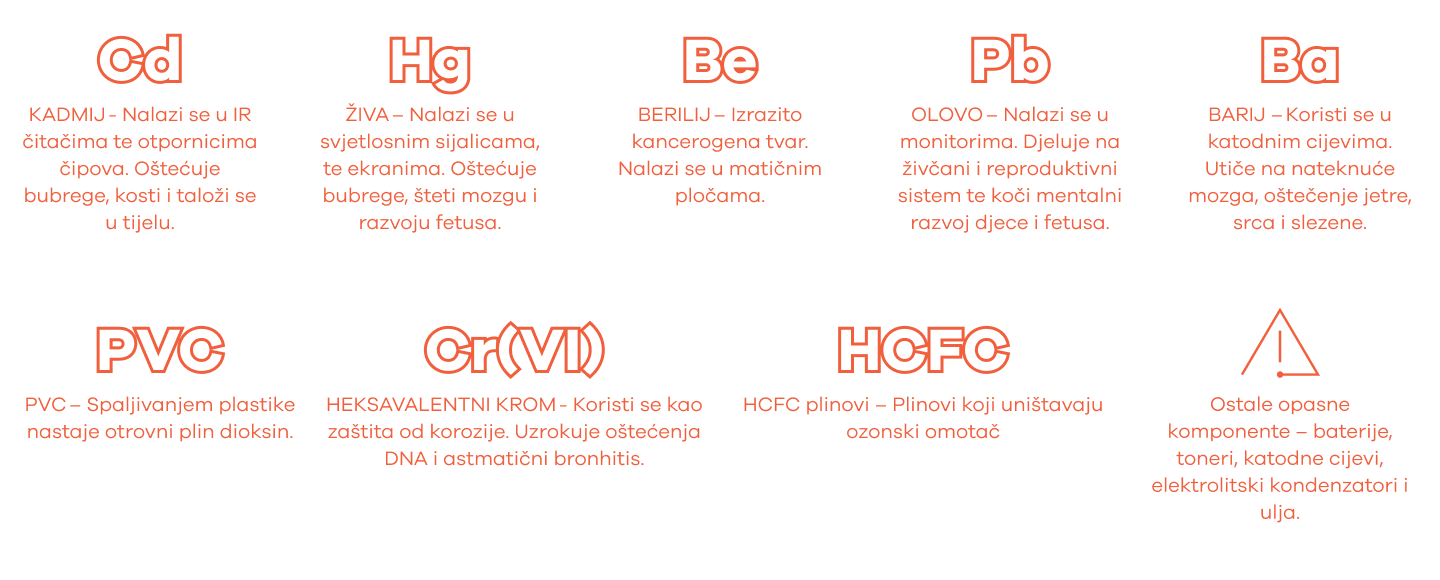
According to the classification, e-waste falls under hazardous waste and contains many substances harmful to human health and the environment, such as: mercury, cadmium, chromium, bromine, lead, arsenic, asbestos, silicon compounds, beryllium, phosphorus, etc. Given that electrical and electronic devices are increasingly used, these chemical elements and compounds very often come into contact with humans, and cause various types of diseases.
Hazardous substances and components in electrical and electronic waste:
Do you want to properly recycle e-waste? Click here
The result of the proper disposal of electrical and electronic waste is recycling and the creation of jobs in the recycling sector, and ultimately a clean environment without pollution and disease.
Recycling means reprocessing waste material in the production process for original or other purposes, but this excludes energy recovery, which represents the use of combustible waste for energy production by direct incineration together with other waste or without it, but with the recovery of heat.